
Ora et Labora: The Feast of St. Benedict, 11 July 2026
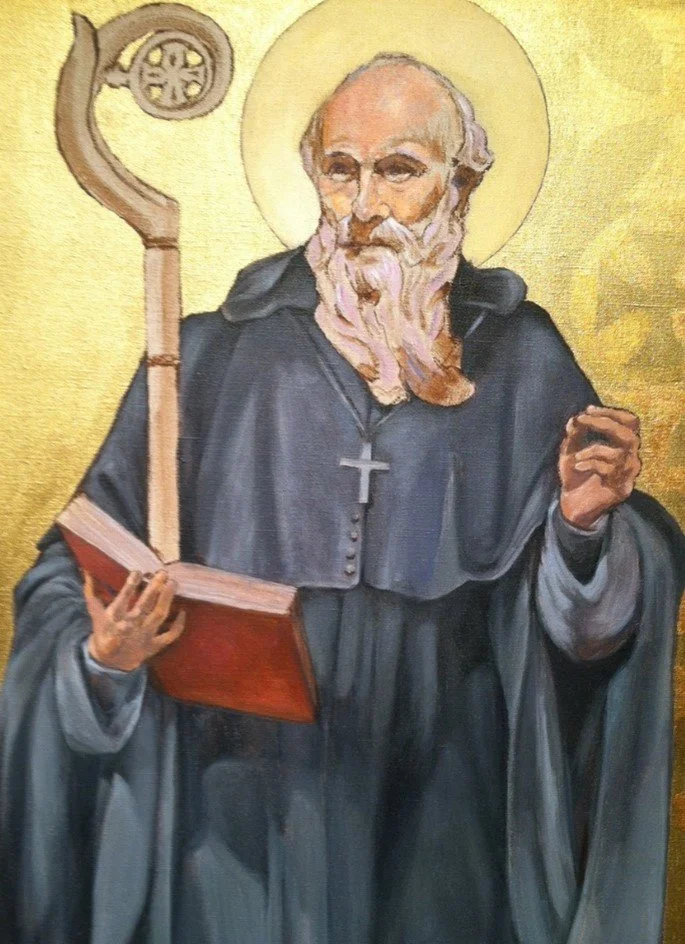
Original Painting by Linda Voita via Catholic Church Art.
On 11 July, the Church celebrates the feast of St. Benedict, the sixth-century abbot whose wisdom and holiness have shaped Christian life for more than 1,500 years. As the founder of Western monasticism and patron saint of Europe, St. Benedict left the Church a lasting spiritual legacy through his Rule, a guide for living a life centred on Christ.
Although written for monks, the Rule of St. Benedict inspires Christians everywhere because its message is built on a simple invitation: seek God first. Following St. Benedict's example, we strive to put nothing before the love of Christ and to reject the pull of worldly temptation. That simple invitation remains as relevant today as the day it was written.
Pope Benedict XVI described St. Benedict as "a luminous star" who shone during a difficult period of history, showing that true renewal begins not with politics or power, but with conversion of heart (General Audience, April 9, 2008). Benedict understood that holiness is built through ordinary, daily faithfulness: prayer, humility, work, hospitality, and perseverance.
St. Benedict’s famous motto, often summarized as Ora et Labora—"Pray and Work"—reminds us that every part of life can become an offering to God. Prayer is not separated from daily responsibilities; rather, it gives meaning and purpose to them. Whether in a monastery, at home, in a workplace, or within a parish community, Christians are called to live each day with Christ at the centre.
St. Benedict also taught that genuine Christian communities are marked by peace and hospitality. His Rule encourages believers to welcome others with charity, to listen carefully before speaking, and to pursue peace in their relationships. These simple practices helped shape generations of monks, and they remain equally important in our communities today.
The Gospel for this feast reminds us not to be afraid of following Christ, even when discipleship requires courage (Matthew 10:24–33). St. Benedict's life was a quiet but powerful witness that lasting change begins with faithful obedience to God. By placing Christ first, he became an instrument through whom countless others discovered the Gospel.
As we celebrate his feast, we pray for the grace to follow his example by putting nothing before the love of Christ. May our homes and our parish become places where prayer, charity, and faithful service help others encounter the peace that only Christ can give.